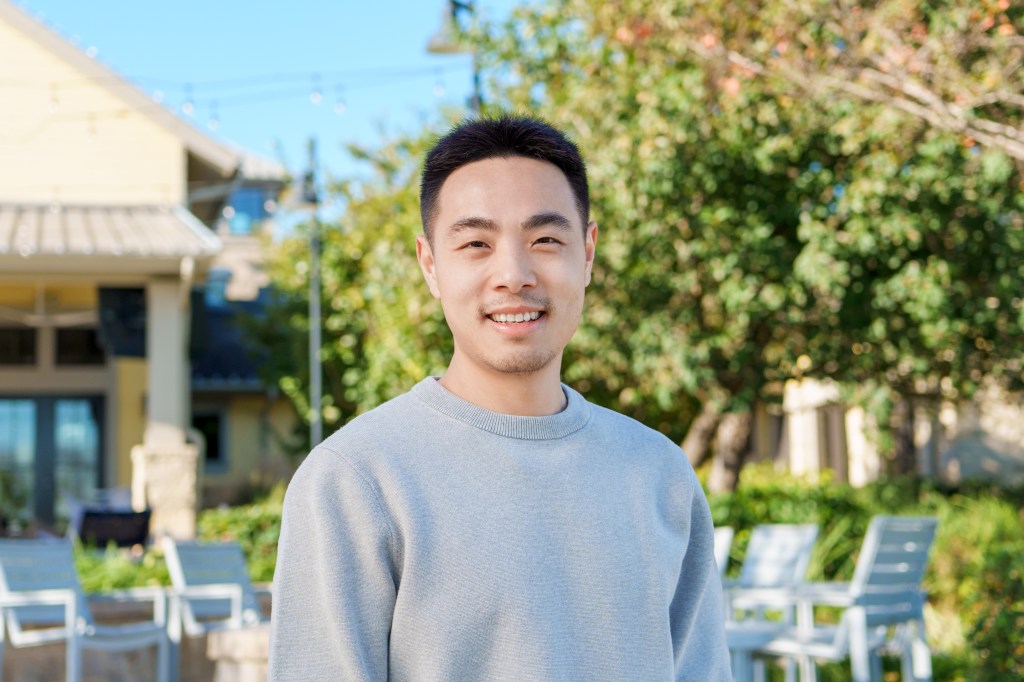
Welcome! I’m Zening Duan (pronounced ZEH-ning DWAN), a tenure-track Assistant Professor of Computational Communication at the National University of Singapore, supported by the NUS Presidential Young Professorship in the Department of Communications and New Media. I’m also affiliated with research communities including the NUS Artificial Intelligence Institute and the UW–Madison Public Tech Media Lab, among others. In addition to research and teaching, I contribute to disciplinary service as Social Media Director for the AEJMC Communication Theory & Methodology Division.
I study attention dynamics and information flows on digital platforms, with an emphasis on online political discourse, social media algorithms, and media ecosystems. My work takes an interdisciplinary approach, engaging communication, media psychology, U.S. politics, and computational social science. One question that motivates my recent work is how Artificial Intelligence (AI) functions as a communicator, competing for public attention across social media, newsrooms, and conversational interfaces. Empirically, I focus on English- and Mandarin-speaking societies in Asia and North America, contexts I have lived in and worked with for years. Methodologically, I draw on both causal and descriptive approaches, using digital trace data, computational multimodal analysis, AI and algorithm auditing, online experiments, and surveys as the question requires.
My lead-authored and/or co-first authored work has appeared in prestigious peer-reviewed journals including Human Communication Research, Journal of Computer-Mediated Communication, Political Analysis, The International Journal of Press/Politics, Information, Communication & Society, among others. Much of this work has been supported by grants and awards from internal and external institutions such as the Holtz Center, WARF, and NUS-PYP.
Before joining NUS, I received my PhD (mass communications) from the School of Journalism and Mass Communication at the University of Wisconsin-Madison. I obtained a joint M.A. from Beijing Normal University and City University of Hong Kong, and a B.A. from Jiangxi Normal University.
In my free time, I enjoy skiing, gardening, and bouldering, as well as spending time with family, friends, and my three feline co-PIs, Toree, Ritto, and Blizzy.
 ZENING DUAN